

Early Gains: Pandemic Curbs Earnings Impacts of JVS Boston’s English for Advancement
Mobility’s evaluation of JVS Boston’s English for Advancement (EfA) found that the program increased participants’ earnings by 6.7% relative to a control group in the second year after program entry. EfA had a large, statistically significant earnings impact for the group of participants whose observation period ended prior to the pandemic. However, the program had no detectable impact for the group whose observation period overlapped with the pandemic. The final report provides important lessons for the adult education and workforce development fields on increasing the employment and earnings of adult English-language learners.
Read more here
Research & Evaluation
Eleven Year Gains: Project QUEST’s Investment Continues to Pay Dividends
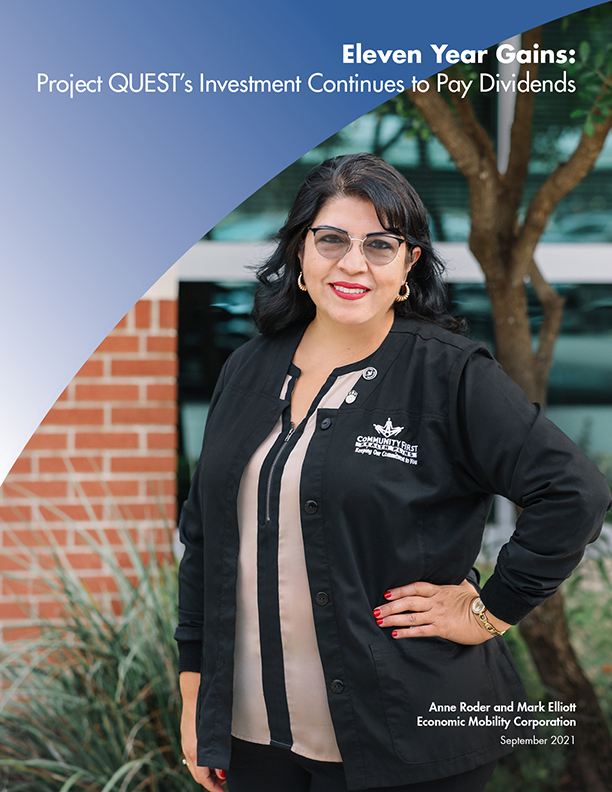
Mobility’s ongoing randomized control trial evaluation of Project QUEST finds that significant earnings impacts have been sustained through eleven years after enrollment. These large, sustained impacts are the longest ever achieved in a U.S. workforce development program.
Read more here
Stepping Up: Interim Findings on JVS Boston’s English for Advancement Show Large Earnings Gains
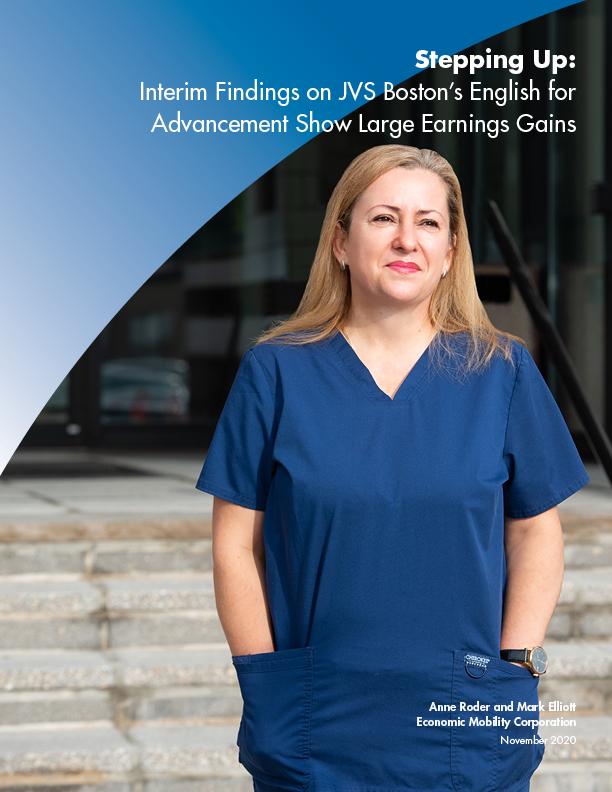
Mobility’s rigorous evaluation of JVS Boston’s English for Advancement (EfA) program found that participants were more likely to be employed and had higher earnings than members of the control group. We believe EfA is the first U.S. adult education program for English-language learners to show significant earnings impacts in a randomized control trial study.
Read more here
Nine Year Education Gains
In Nine Year Gains, we reported that Project QUEST participants had benefitted from the largest, sustained earnings impacts ever found in a rigorously evaluated workforce development program. In our new report, Nine Year Education Gains, we document that these earnings gains were accompanied by perhaps even more impressive educational impacts—impacts that continued to grow over the entire nine-year follow-up period.
Read more here
Philanthropy, Outcomes and Impact
Philanthropy’s growing emphasis on outcomes has had profound implications for the workforce development field. In Philanthropy, Outcomes and Impact we share observations on some of the unintended consequences of this movement from leading practitioners in the field. We also examine how focusing exclusively on outcomes can reduce an organization’s impact by drawing on findings from our evaluation of Project QUEST.
Read the brief here
Nine Year Gains: Project QUEST's Continuing Impact
Mobility’s nine-year randomized controlled trial evaluation found large, sustained earnings impacts for participants that are among the most impressive ever found in a rigorously evaluated workforce development program.
Learn more here
Subsidized Employment Programs Show Promise
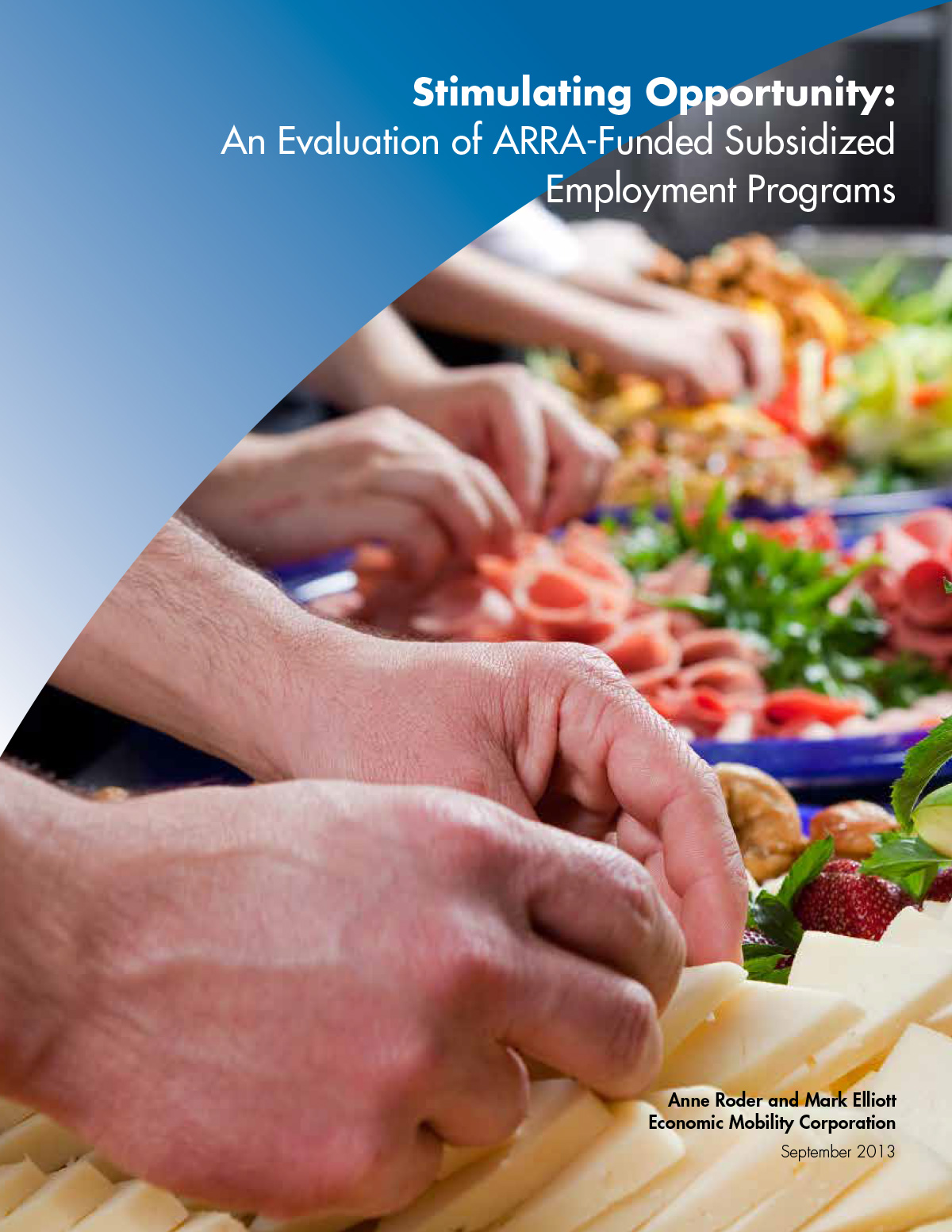
Mobility’s evaluation of five ARRA-funded subsidized employment programs documents substantial employment and earnings gains for participants, particularly the long-term unemployed. Employers also saw benefits to their bottom line and were eager to participate in similar programs in the future.
Learn more here
Partnerships for Skills Gains: Investing in Frontline Workers
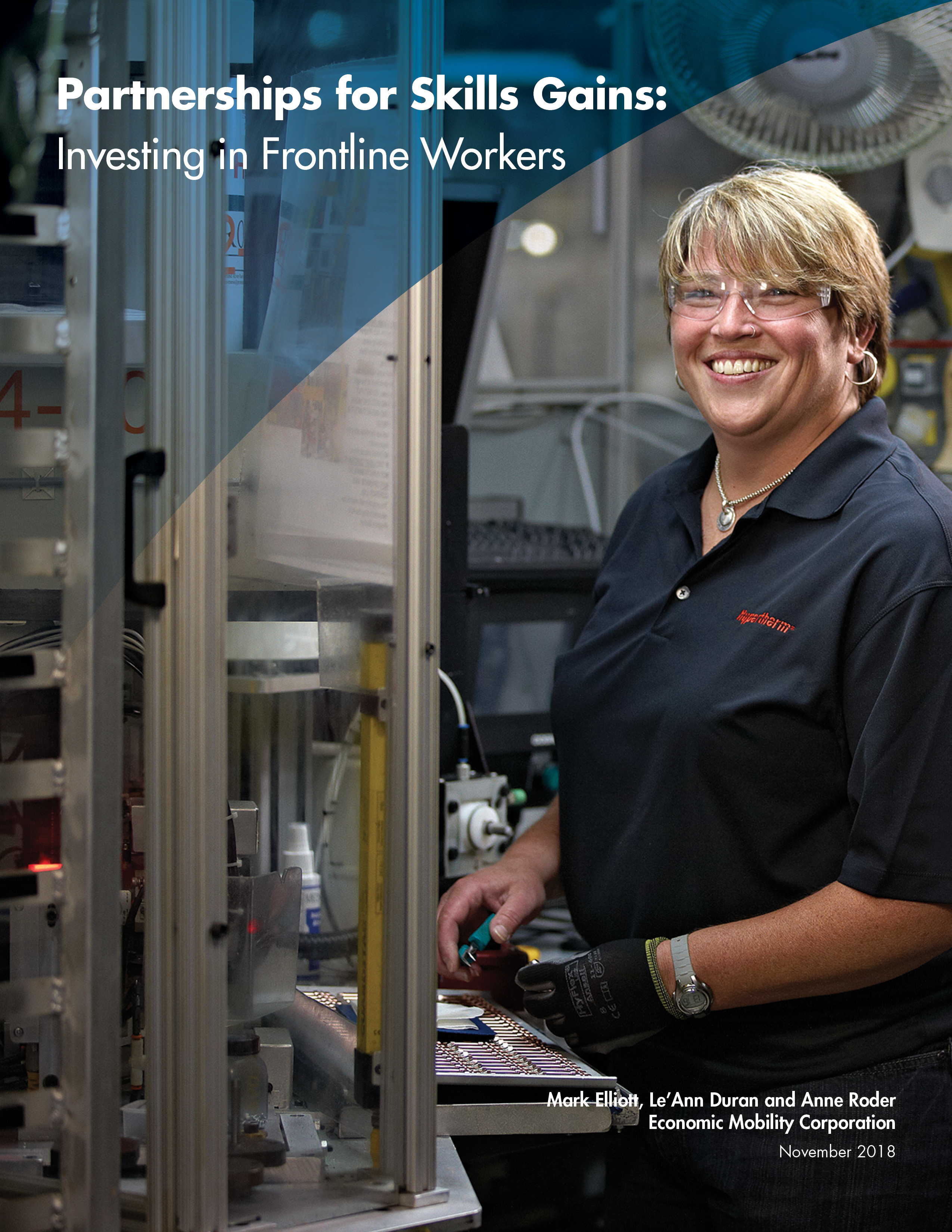
Mobility interviewed more than 150 leaders to identify partnerships between employers and workforce organizations where employers are helping pay for skills upgrading of their front line workers. We have published a short summary of the project and invite you to explore the individual partnerships on the accompanying map.
Learn more here
Escalating Gains: The Elements of Project QUEST’s Success

Our full report on the Project QUEST evaluation details the array of supports needed to help low-income, low-skilled workers complete long-term occupational training that led to large earnings gains six years after enrollment.
Learn more here
Taking on Credit: Per Scholas Builds Students’ Job and Financial Skills
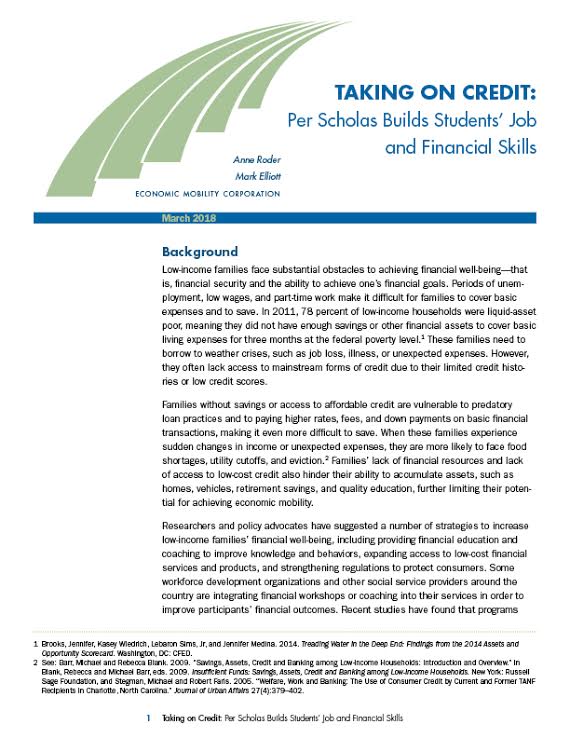
Mobility’s assessment of Per Scholas reveals the value of financial coaching for workforce development participants.
Learn more here
Escalating Gains: Project QUEST’s Sectoral Strategy Pays Off

Our impact evaluation demonstrated that Project QUEST participants had annual earnings over $28,000, which was more than $5,000 greater than control group members, six years after enrollment.
Learn more here
First Steps on the Road to Financial Well-Being
Participants in LISC’s Financial Opportunity Centers initiative were more likely to be employed year-round and were taking steps to improve their credit and financial circumstances.
Learn more here
Moving Up the Ladder: Per Scholas Launches Project Scale

Mobility’s evaluation of Per Scholas’ new training program Project Scale finds that graduates are typically working full-time, making well over $20 an hour.
Learn more here
Building Stronger Financial Futures

Our interim evaluation of LISC’s Financial Opportunity Centers suggests that low-income individuals can take positive steps to improve their credit histories which could lead to improved credit and financial outcomes in the future.
Learn more here
Building Credit Where It's Needed

Mobility’s brief argues that it is critical for workforce organizations to address participants’ credit issues as part of their program strategies.
Learn more here
Sign up for our mailing list:
News
New York Times features Mobility President Mark Elliott in article about the remarkable success of Project QUEST
“Project Quest has succeeded where many similar retraining efforts have failed, taking workers lacking in skills and successfully positioning them for jobs where they can earn double or triple what they did previously.” – Nelson Schwartz, New York Times business columnist.
Arnold Ventures Features Nine Year Gains Findings
Arnold Ventures highlighted findings from our report Nine Year Gains in a post on its Straight Talk on Evidence website.
“this is the type of evidence that our country needs to address one of our most pressing national problems: Four decades of income stagnation for low- and moderate-income Americans.”
Houston Chronicle Highlights Findings from Mobility's Nine Year Gains Report on Project QUEST
“For a three-year investment of $11,000 in tuition, books and life coaching, a parent can escape poverty and set his or her family on a path to the middle class. They’ll stop needing food stamps, Medicare and other taxpayer services. Instead, they will pay taxes and contribute to the economy.” – Chris Tomlinson, Houston Chronicle
New York Times Editorial Features Mobility Study of Subsidized Employment

In a lead editorial The Crisis in Minority Unemployment, the New York Times focused on the promise of subsidized employment as a strategy to help young black men who are out of school and out of work. The editorial focuses on our study of subsidized employment programs in Florida, Wisconsin. Mississippi and California, which showed large earnings gains, particularly for the long-term unemployed.
Mobility's Work Featured in Federal Report on Job Training

Mobility’s evaluations of subsidized jobs programs and Year Up featured in federal report What Works in Job Training: A Synthesis of the Evidence.
Access the Report (dol.gov)
A Song in the Front Yard

This report chronicles the many challenges addressed by nonprofits in the 741 Collaborative as they seek to improve the employment prospects of residents on Chicago’s south side. Despite large public funding cuts, the Collaborative members persevered through one of the worst recessions in many years.
Mobility Releases Report on Immigrants and Economic Opportunity

Sound Investments: Building Immigrants’ Skills to Fuel Economic Growth identifies innovative programs across the country that increase immigrants’ opportunities to move up.